Ignoring your roof isn’t just a minor oversight; it’s a costly gamble. Did you know that small, seemingly insignificant cracks can snowball into expensive repairs, impacting your home’s structural integrity and driving up energy bills? This article will delve into the financial pitfalls of neglecting roof maintenance and demonstrate how proactive care can protect your wallet. By understanding the hidden and long-term costs of neglect, homeowners can make informed decisions that ensure both safety and savings. Let’s explore why regular roof maintenance is not just a recommendation but a financial necessity.
Understanding the Financial Impact of Neglecting Roof Maintenance
Neglecting roof maintenance can result in immediate and long-term financial burdens. Minor issues, such as small cracks and holes, may seem insignificant at first but can quickly escalate into major problems. When left unaddressed, these minor defects can lead to significant repair costs, including emergency repairs and extensive structural work. Additionally, neglecting routine maintenance can shorten the lifespan of a roof, leading to the premature need for a complete replacement, which is substantially more expensive than periodic upkeep.
Specific issues arising from neglected roof maintenance include water damage, structural damage, and increased energy costs. Water damage is one of the most common and costly consequences, often resulting from leaks that could have been easily patched. When water infiltrates the roof, it can cause wood rot, mould growth, and even pest infestations, all of which weaken the structural integrity of the building. Furthermore, compromised insulation due to water damage can lead to higher energy bills as the HVAC system works harder to maintain indoor temperatures.
The cost difference between minor repairs and major damage repairs is stark. Addressing a small leak early on might cost a few hundred pounds while repairing extensive water damage and structural issues can run into the thousands. This disparity underscores the importance of regular maintenance, which not only prevents minor issues from becoming major problems but also saves significant amounts of money in the long run.
- Water damage leading to mould and rot
- Structural damage requiring extensive repairs
- Increased energy costs due to compromised insulation
- Pest infestations weaken structural integrity
- Premature roof replacement due to neglect
Benefits of Regular Roof Maintenance
Regular roof maintenance offers substantial financial and practical benefits. Addressing minor issues like missing tiles or small leaks before they escalate into major problems can save significant amounts of money. For instance, a minor repair might cost a few hundred pounds, while a major repair or full roof replacement can run into the thousands. Additionally, proper maintenance can extend the lifespan of a roof. Materials such as asphalt shingles typically last between 20 to 30 years when well-maintained, reducing the frequency and cost of replacements.
Energy efficiency is another crucial benefit of regular roof maintenance. A well-maintained roof ensures that insulation remains intact, which is essential for maintaining indoor temperatures. This reduces the strain on HVAC systems and leads to lower energy bills. By preventing leaks and ensuring proper insulation, regular maintenance can enhance energy efficiency, resulting in cost savings on heating and cooling expenses.
Furthermore, regular roof maintenance positively impacts property value and insurance premiums. A well-maintained roof is a significant selling point for potential buyers, as it indicates that the property has been well cared for. This can increase the property’s market value. Additionally, insurance companies often offer lower premiums for properties with well-maintained roofs, as they pose a lower risk for claims related to water damage, structural issues, and other roof-related problems. Regular maintenance thus provides a comprehensive cost-saving strategy, enhancing both immediate and long-term financial stability.
| Maintenance Action | Expected Benefit |
|---|---|
| Regular Inspections | Early detection of issues, preventing major repairs |
| Cleaning Gutters | Prevention of water damage and structural issues |
| Replacing Missing Tiles | Maintaining roof integrity and preventing leaks |
| Sealing Cracks | Preventing water infiltration and energy loss |
| Trim Overhanging Branches | Reducing debris accumulation and damage risk |
Case Studies Illustrating Cost Savings from Regular Maintenance
Case studies are crucial for understanding the tangible cost savings that regular roof maintenance can offer. Real-life examples provide concrete evidence of how proactive upkeep can prevent expensive repairs and extend the lifespan of a roof.
In Los Angeles, a homeowner decided to invest in an annual roof inspection and minor leak repairs, costing £350. This proactive approach saved them thousands of pounds in potential water damage repairs. By addressing minor issues early, they prevented extensive water infiltration that could have led to wood rot, mould growth, and significant structural damage. This case underscores the effectiveness of spending a modest amount on regular maintenance to avoid substantial repair bills.
The key takeaway from this Los Angeles case study is the significant savings achieved by investing in regular maintenance. Spending £350 annually on inspections and minor repairs can prevent thousands of pounds in water damage and structural repairs. This example highlights the cost-efficiency of maintaining a roof, demonstrating that minor, periodic expenses can avert major, unforeseen costs.
A commercial property manager in Salt Lake City experienced similar benefits. By investing £1,200 annually in a comprehensive maintenance plan, which included replacing deteriorating flashing, they avoided over £10,000 in emergency repairs. This investment ensured that minor issues were promptly addressed, preventing them from escalating into major problems. The result was not only financial savings but also uninterrupted business operations, as no emergency repair work was required.
These case studies illustrate the substantial cost savings that can be achieved through regular roof maintenance. Whether for residential or commercial properties, investing in routine inspections and minor repairs can prevent major issues, saving significant amounts of money in the long run.
Best Practices for Regular Roof Maintenance
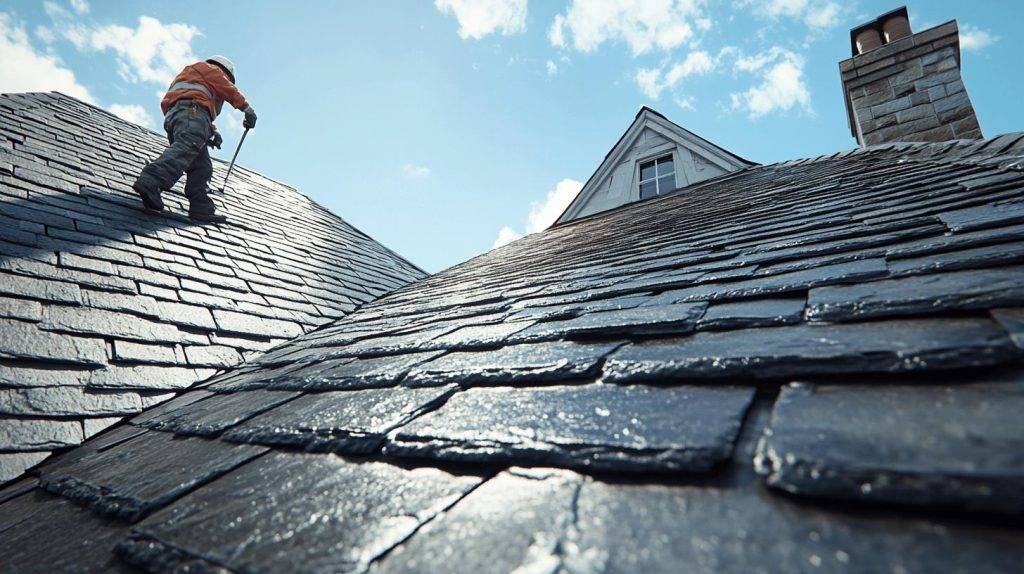
Professional roofer inspecting and maintaining a slate roof on a sunny day
Regular inspections and general upkeep are vital for maintaining the health of your roof. Inspections should be conducted bi-annually and after extreme weather events to identify potential issues early. Early detection of problems such as small leaks, missing tiles, or minor cracks can prevent these issues from escalating into costly repairs. Consistent upkeep not only extends the lifespan of your roof but also ensures the structural integrity of your home, ultimately saving money in the long run.
Specific maintenance tasks are essential for preventing water damage and other common roofing issues. Gutter maintenance, for instance, is crucial. Cleaning gutters and downspouts regularly prevents water buildup, which can lead to leaks and structural damage. Installing gutter guards can also minimise debris accumulation, reducing the frequency of cleanings. Additionally, trimming overhanging branches can prevent leaves and branches from clogging gutters and causing damage to the roof surface. Regular debris removal from the roof itself is equally important to prevent water pooling and subsequent damage.
Balancing DIY tasks and professional maintenance is key for effective roof care. Homeowners can handle basic tasks such as cleaning gutters, removing debris, and trimming branches. However, complex tasks like inspecting for structural damage, replacing tiles, and sealing cracks should be performed by professionals. Professional maintenance ensures that all issues are correctly identified and addressed, providing peace of mind and preventing minor problems from becoming major expenses.
- Conduct bi-annual inspections
- Clean gutters and downspouts regularly
- Install gutter guards to minimise debris
- Trim overhanging branches
- Remove debris from the roof surface
- Address minor issues promptly
- Schedule professional inspections for complex tasks
Seasonal Roof Maintenance Tips
Seasonal roof maintenance is crucial for preserving the integrity and longevity of your roof. Different seasons bring varied weather conditions that can impact the roof’s health. For instance, heavy rains in autumn can lead to water buildup and leaks, while winter’s snow and ice can cause structural stress and ice dams. Spring and summer, on the other hand, may introduce issues such as debris accumulation from budding trees and thermal expansion from high temperatures. Proactively addressing these seasonal challenges ensures that minor problems are identified and resolved before they escalate into costly repairs.
For fall and winter, essential maintenance tasks include cleaning gutters and downspouts to prevent water buildup and inspecting and sealing any cracks around vents, chimneys, and skylights. This prevents water from seeping into the roof structure and causing damage. Additionally, ensuring that the roof is free of debris, such as fallen leaves and branches, can prevent blockages that lead to water pooling. In spring and summer, the focus should shift to removing any debris that accumulated over the winter and checking for damage caused by ice and snow. Trimming overhanging branches and inspecting for any signs of wear and tear, such as missing tiles or cracked flashing, will help maintain the roof’s condition throughout the warmer months.
- Clean gutters and downspouts regularly
- Inspect and seal cracks around vents, chimneys, and skylights
- Remove debris from the roof surface
- Trim overhanging branches to prevent damage
- Check for damage caused by ice and snow in spring
Professional Roof Inspections: Why They Matter
Professional roof inspections are critical for maintaining the integrity and longevity of your roof. These inspections provide a comprehensive assessment of your roof’s condition, identifying any damage or potential issues that may require attention. A thorough inspection includes checking for missing or damaged tiles, leaks, cracks, and other signs of wear and tear. By addressing these problems early, costly repairs can be avoided, and the overall lifespan of the roof can be extended. Professional inspectors are trained to spot issues that might be missed by the untrained eye, ensuring a complete evaluation of the roof’s health.
Regular roof inspections, ideally conducted bi-annually and after extreme weather events, offer significant long-term benefits. These inspections help identify potential problems before they escalate into major issues, saving homeowners substantial amounts in repair costs. Investing in timely roof repairs and regular maintenance based on inspection findings can prevent emergencies and extend the roof’s lifespan. This proactive approach not only provides financial savings but also ensures peace of mind, knowing that the roof is in good condition and capable of protecting the home from environmental elements.
- Early detection of minor issues before they become major problems
- Prevention of water damage and leaks
- Extension of the roof’s lifespan
- Reduction in emergency repair costs
- Increased property value and lower insurance premiums
Long-term Savings from Proactive Roof Maintenance
Investing in timely roof repairs and regular maintenance offers substantial long-term savings. By addressing minor issues as they arise, homeowners can significantly reduce the likelihood of needing costly emergency repairs. For example, a small leak can be fixed for a fraction of the cost compared to repairing extensive water damage caused by neglect. Additionally, proactive maintenance can extend the lifespan of the roof, allowing materials such as tiles or asphalt shingles to last their full expected duration of 20 to 30 years. This longevity means fewer replacements over time, which translates to considerable savings.
Beyond immediate financial savings, proactive roof maintenance also enhances property value and reduces insurance premiums. A well-maintained roof is a major selling point for potential buyers, as it indicates that the property has been diligently cared for. This can lead to higher offers and a quicker sale. Insurance companies often offer lower premiums for homes with roofs that are regularly inspected and maintained, as these homes present a lower risk for costly claims related to water damage or structural issues. This dual benefit of increased property value and reduced insurance costs further underscores the financial advantages of maintaining a proactive approach to roof care.
Preventing Roof Damage Through Regular Maintenance
Early detection is crucial in preventing roof damage. By identifying issues such as missing shingles, cracked tiles, or indoor indicators like water stains and peeling paint early on, homeowners can avoid extensive and costly repairs. Regular inspections enable the timely identification of potential problems, ensuring that minor issues are addressed before they escalate.
Common signs of roof damage include missing or damaged shingles, cracked tiles, and water stains on ceilings or walls. Other indicators might be peeling paint, which suggests moisture infiltration, and the presence of mould or mildew. These signs, if left unaddressed, can lead to severe structural damage, water leaks, and even health hazards due to mould growth. Regular maintenance and inspections help in spotting these issues early, allowing for prompt intervention.
Addressing minor issues promptly is essential. Small repairs, such as replacing a few missing shingles or sealing a crack, are relatively inexpensive compared to the cost of repairing extensive water damage or structural damage. By taking immediate action, homeowners can prevent minor defects from becoming major problems, thereby saving money and maintaining the integrity of the roof.
Regular maintenance can significantly extend the lifespan of a roof. Preventative measures like cleaning gutters, removing debris, and trimming overhanging branches help in safeguarding the roof against potential damage. Routine checks and timely repairs ensure that the roof remains in good condition, thus preventing serious damage and prolonging its life. This proactive approach not only saves money in the long term but also ensures the safety and comfort of the home.
Final Words
Neglecting roof maintenance leads to substantial financial repercussions, including water damage, structural weakening, and increased energy costs. Small issues balloon into expensive repairs, demanding more significant financial investment.
Regular roof maintenance provides numerous benefits, such as cost savings, lifespan extension, and improved energy efficiency, enhancing your property’s value and reducing insurance costs.
Case studies underline the savings achievable through proactive upkeep. Routine inspections and maintenance tasks prevent severe damage, ensuring long-term savings.
In summary, The Cost of Neglect: Why Regular Roof Maintenance Saves You Money emphasises that timely maintenance secures your property’s safety, longevity, and financial health.
FAQ
What are the financial impacts of neglecting roof repairs?
Neglecting roof repairs can lead to significant financial repercussions, including water damage, structural issues, and increased energy costs. Small cracks and holes can turn into major issues, resulting in expensive repairs.
What specific problems arise from neglected roof maintenance?
Neglect can cause water damage, rot, and pest infestations, weakening supporting structures and creating unsafe conditions. Repairing water damage is more costly than addressing minor roof issues early on.
How do minor roof repairs compare to major damage repairs in terms of cost?
Repairing minor roof issues promptly is significantly cheaper than repairing major damage. Small repairs can prevent extensive water damage and structural issues, saving substantial amounts of money in the long run.
What are examples of financial repercussions from neglecting roof maintenance?
- Water damage repair costs
- Structural damage repair expenses
- Increased energy bills
- Pest infestation treatment
- Emergency repair costs
What are the benefits of regular roof maintenance?
Regular roof maintenance can prevent costly repairs by addressing minor issues before they escalate. Proper maintenance can extend the lifespan of a roof and enhance energy efficiency, reducing overall maintenance costs.
How does regular roof maintenance contribute to energy efficiency?
A well-maintained roof enhances energy efficiency by reducing HVAC strain and lowering energy bills. Addressing insulation and ventilation during maintenance optimises indoor temperature regulation.
How does regular roof maintenance affect property value and insurance premiums?
Well-maintained roofs enhance property value and can lower insurance premiums. Insurance companies favour properties with less risk, and a well-maintained roof presents fewer risks for potential claims.
Why are case studies important for understanding cost savings from roof maintenance?
Case studies provide real-life examples that demonstrate the significant cost savings achieved through regular maintenance, helping to justify the investment in routine roof care.
Can you give a case study of cost savings from residential roof maintenance?
In Los Angeles, a homeowner saved thousands in water damage repairs by spending £350 on an annual inspection and minor roof leak repair, highlighting the importance of proactive maintenance.
What is another example of cost savings from commercial roof maintenance?
A commercial property manager in Salt Lake City avoided over £10,000 in emergency repairs by investing £1,200 annually in a maintenance plan that included replacing deteriorating flashing and regular inspections.
What are the best practices for regular roof maintenance?
Regular inspections, ideally bi-annually and after extreme weather, help identify potential problems early. Maintaining gutters, clearing debris, and trimming overhanging branches are essential tasks.
What specific maintenance tasks should be performed regularly?
- Clean gutters and downspouts
- Remove roof debris
- Trim overhanging branches
- Inspect roof and flashing
- Seal cracks and leaks
- Check for missing or damaged tiles
- Schedule professional inspections
How should homeowners balance DIY and professional roof maintenance?
Homeowners can perform basic tasks like gutter cleaning and debris removal. Complex tasks, such as major repairs and structural assessments, should be handled by professionals to ensure safety and quality.
Why is seasonal roof maintenance important?
Seasonal maintenance is crucial as different weather conditions affect roof durability. Preparing for seasonal changes helps prevent damage and ensure the roof’s longevity.
What specific tasks should be done for seasonal roof maintenance?
Fall and winter tasks include cleaning gutters, inspecting for cracks, and sealing leaks. Spring and summer tasks include checking for damage, removing debris, and ensuring proper ventilation.
What are some seasonal maintenance tips for roofs?
- Clean gutters in autumn
- Seal leaks before winter
- Inspect roof after storms
- Ensure proper summer ventilation
- Remove spring debris
Why are professional roof inspections important?
Professional inspections provide a comprehensive assessment of a roof’s condition, ensuring any damage is promptly addressed, preventing major issues and saving costs in the long run.
How often should roofs be professionally inspected?
Roofs should be inspected bi-annually and after extreme weather events. Regular inspections help identify potential problems early and provide substantial long-term savings.
What are the benefits of professional roof inspections?
- Identify potential issues early
- Prevent costly repairs
- Extend roof lifespan
- Increase property value
- Ensure structural safety
What are the long-term savings from proactive roof maintenance?
Proactive maintenance reduces emergency repair costs, extends the roof’s lifespan, and enhances property value, leading to substantial financial savings over time.
How does proactive roof maintenance benefit property owners?
Proper maintenance can extend the lifespan of a roof, reduce the need for emergency repairs, increase property value, and lower insurance premiums, offering peace of mind and financial savings.
How can regular maintenance prevent roof damage?
Early detection and prompt addressing of minor issues like missing shingles or cracked tiles can prevent major repairs. Regular maintenance can avert water damage, mould growth, and structural issues.
What are common signs of roof damage to look out for?
- Missing or damaged tiles
- Cracked or curled edges
- Indoor water stains
- Peeling paint
- Visible sagging
Why is it important to address minor roof issues promptly?
Promptly addressing minor issues prevents them from escalating into major problems, thereby avoiding costly repairs and maintaining the roof’s structural integrity.
How does regular roof maintenance extend the roof’s lifespan?
Regular maintenance and early problem detection can prevent serious damage and extend the roof’s lifespan, ensuring it remains in good condition for many years.